
Project overview:
Sponza Treasure is a WebVR demo experience designed to showcase the Microsoft Edge virtual reality capabilities. The project started in 2017, with the onset of a new generation of VR devices. We started with the existing 3D model of the Sponza Palace environment from Babylon.JS, converting it to a multiplayer VR game.
My role:
I led the UX effort, including game planning, prototyping, play testing, and the publishing process. I worked closely with our internal development team, a 3D designer, and the Babylon.JS and Microsoft Edge teams to overcome technical challenges.
A glimpse at the WebVR Demo
Stakeholders
Microsoft Edge Marketing — The Edge team focuses on promoting the Microsoft Edge browser and served as the project owner and funder.
Partners
Plain Concepts — A development company hired to help with the ideation process, design, and the front and backend development of the final digital experience. I was the UX lead who oversaw the project from the ideation stage to final execution and testing.
Babylon.JS – A WebGL-based graphics engine that provides open-source 3D resources. They supplied the 3D built of Sponza Palace and support in the WebVR space.
DISCOVERY
What is Microsoft Edge?
Microsoft Edge is the default web browser replacing Internet Explorer 11 and Internet Explorer Mobile. It was initially released in 2015 for Windows 10 and Xbox One.
How does VR work in general?
Virtual reality is a simulated experience that can either mimic the real world or function completely differently. VR devices use head tracking, motion tracking, and eye-tracking to provide an immersive interactive experience. Current applications tend to focus on entertainment and education.
What is Web VR?
WebVR is an open specification that enables users to experience VR in their browsers. The goal is to make it easier for everyone to get into VR experiences, on a broader set of devices. Users currently need a headset and a compatible browser to experience WebVR.
What VR device should we focus on?
The ultimate goal is to make the game available across different devices, but our initial focus was on Windows devices. When we started the project, the only available VR device on the market was the Oculus, so we experimented with it while waiting for the release of new Windows devices.
I led the discovery phase while working closely with our engineers.
What are some game examples?
We reviewed a few existing games to get an idea of how VR games work in general. Playing these games also offered some early inspiration for interaction and motion design.
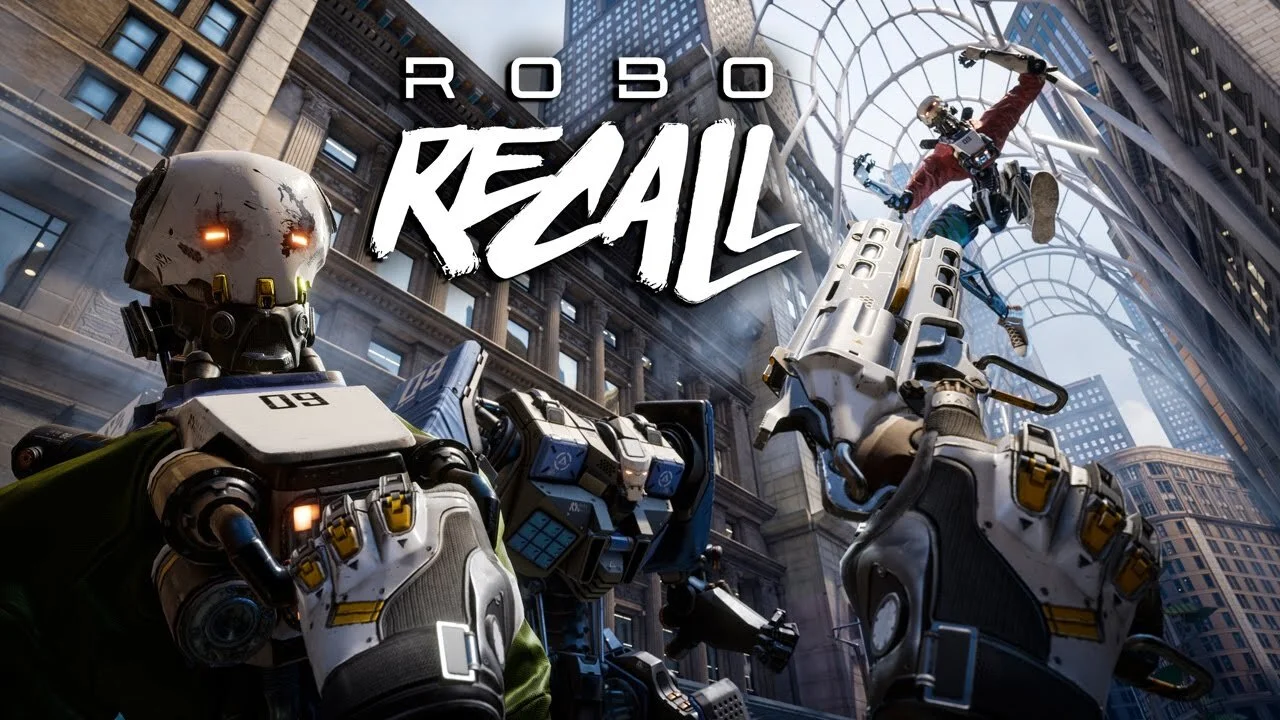
Robo Recall
Robo Recall is a next-level wave shooter with a goal of taking down hordes of rogue robots swarming a city. It provides new, inventive ways to interact with the game environment and weapons.
https://www.ign.com/videos/2016/10/06/robo-recall-announcement-trailer
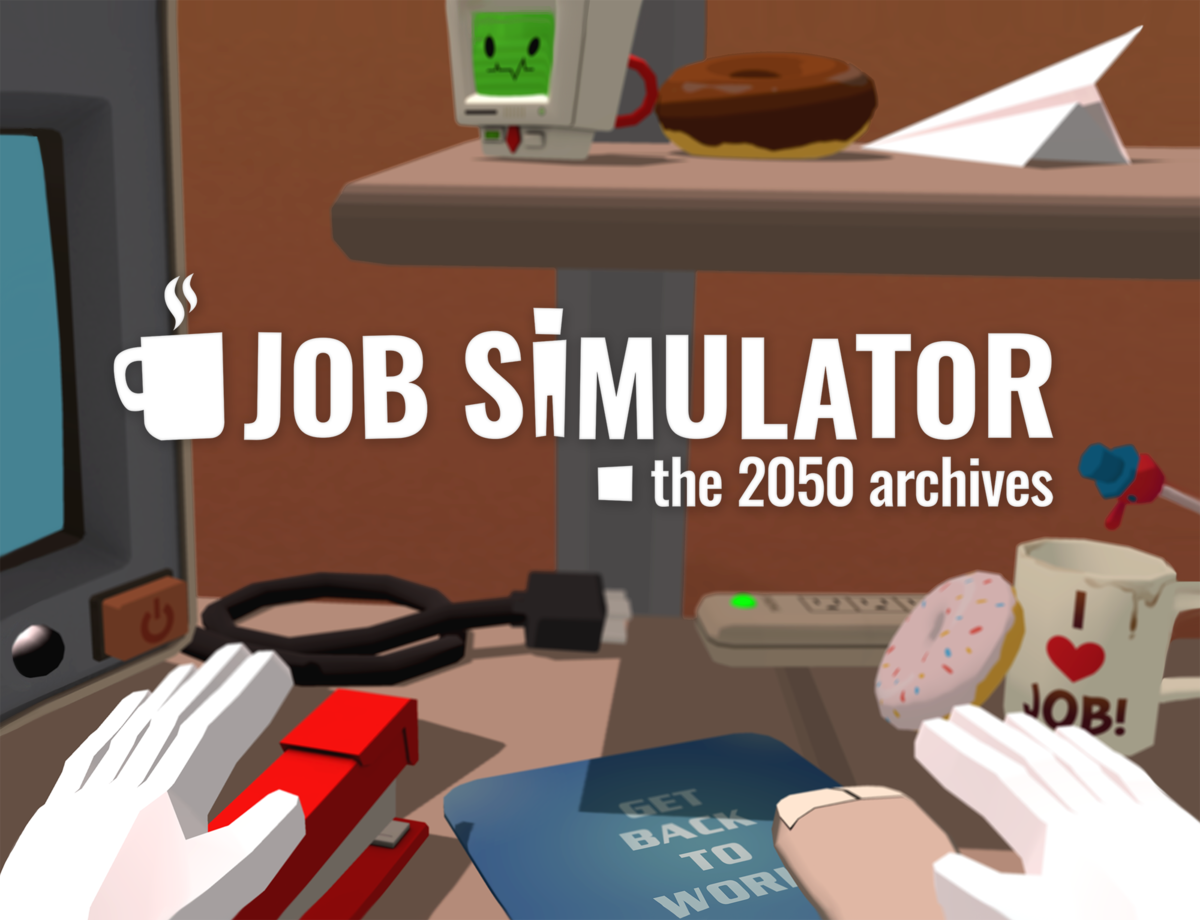
Job Simulator
Set in 2050, when robots have taken all human jobs, the user learns what it was like to be a human at work in the 20th century. It’s a silly game in which people to make copies, use vending machines, and explore fun ways to complete typical office tasks.
https://www.ign.com/videos/2016/04/26/job-simulator-gameplay-office-worker
Superhot
Originally a well-established PC game, Superhot is a first-person shooter with a novel twist. As long as the player stands still, their enemies are frozen in time. As soon as the player moves, so will the bullets, meaning they have to think their way through firefights.
https://superhotgame.com/
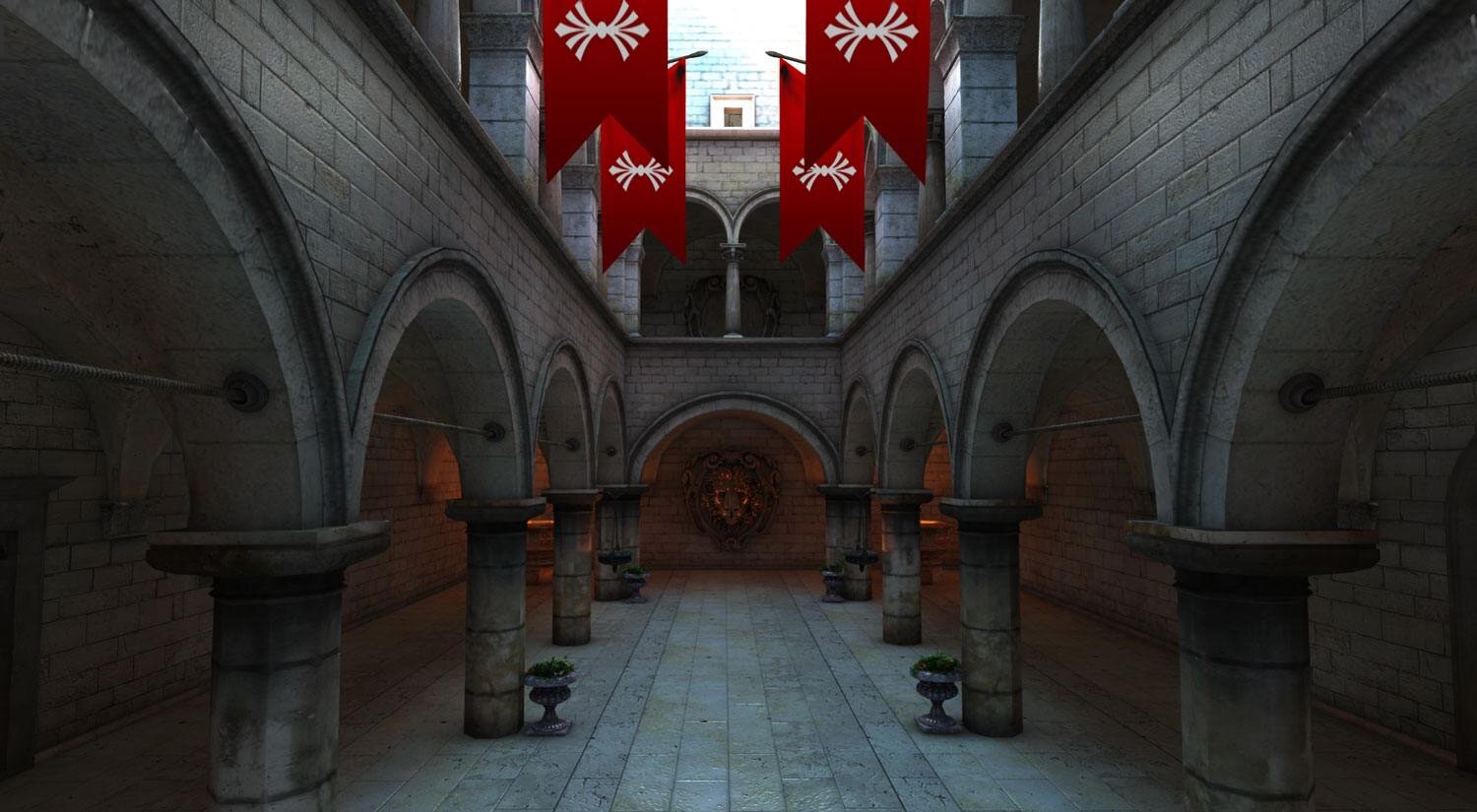
What do we know about Sponza Palace?
The Babylon.JS team designed a 3D game environment around the real Sponza Palace, a rectangular building with an inner courtyard, built-in Dubrovnik, Croatia between 1516 and 1522. They made their original 3D environment available to use for our VR adaptation:
https://www.babylonjs.com/demos/sponza/
Who are the end-users in this project?
The game was scheduled for release at the Microsoft Edge summit and would be presented in various events supported by Microsoft that feature Microsoft Edge. People who attend Microsoft events come from a wide range of different backgrounds, but we focused on a few specific developer personas:

The old-schooler
Robert Smith
Age: 47
Spending power: $$$$
· Experienced full-stack developer
· Lives in Austin, Texas
· Has been in the tech field for over 25 years
· Goes to multiple tech events when paid for by his employer

Fresh from school
Joan Willie
Age: 24
Spending power: $$$
· New web developer
· Lives in Seattle, Washington
· One year of work experience in the field
· First time attending a tech event

Career switcher
Matthew Mason
Age: 36
Spending power: $$$$
· Program Manager for a tech company
· Lives in Portland, Oregon
· Started off as a developer but transitioned into management a few years back.
· Attends 2+ events each year for work purposes
DEFINE THE PROBLEM
Build a WebVR game based on the Sponza Palace 3D environment, to be used in various events as a demo promoting Microsoft Edge. The game had to be engaging and interactive for the general public, but the primary audience were those who work in the tech sector. This project was divided into 2 different phases.
PHASE 1
Provide a short game experience for the Edge Summit in September 2017.
PHASE 2
Provide the full game experience for the Build conference in June 2018.
PHASE 1 - IDEATE
We kicked off the ideation process by developing a story set in the Sponza Palace. We conducted brainstorm sessions with the internal team to outline the game flow and write up a storyline to go along with the game.
Game story:
In the 16th century, a king and his two sons were killed while protecting the Sponza treasure. Their souls remained in the palace to continue guarding the treasure, but after many years, it is time to reveal it to the people of Sponza. The ghosts of the two sons work together to unlock the treasure.
PHASE 1 - Game proposals
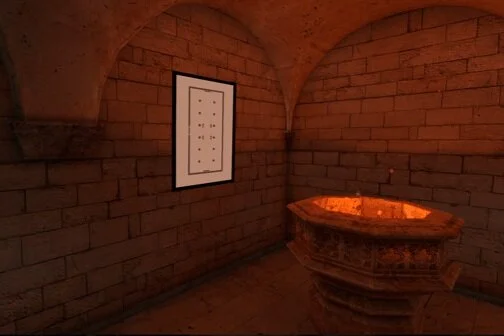
Idea 1: Find the hidden map
Player 1 and Player 2 work together to look for a map, hidden behind the king’s portrait. The map reveals where the treasure is hidden.
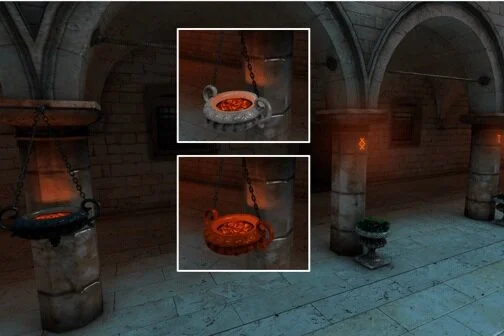
Idea 2: Move the metal pots
Player 1 and Player 2 need to move metal pots to the correct position with matching runes. Due to a curse, Player 1 can only touch the silver pots and Player 2 can only touch the bronze pots. Players need to work together to get to the treasure.
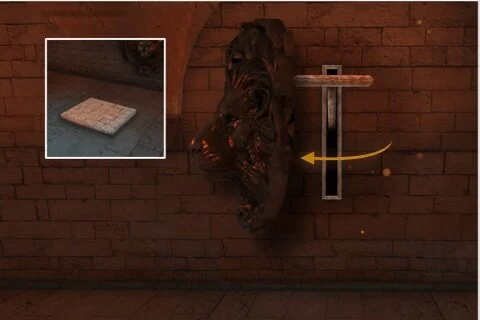
Idea 3: Look for the secret tile
There are two secret tiles hidden within the palace. Player 1 and Player 2 must look for the tiles and step on them at the same time. Then the lion head will open up and one player pulls the lever to get the treasure.
The three different game proposals were presented to the client and Idea 2 was chosen, with some modifications.
PHASE 1 – User flow
We started with a short intro video to help set up the story of the game and I wrote the logic for single player vs multiplayer mode. I was responsible for the game flow, game logic, and interaction design.
PHASE 1 – PROTOTYPE
During Phase 1, we developed the game the be played with an Xbox controller. The game was timed, and the player had to move all the pots to their correct position to complete the game.
We focused on keeping the experience straight forward; the primary goal was to have a working game that allowed event attendees to experience WebVR.
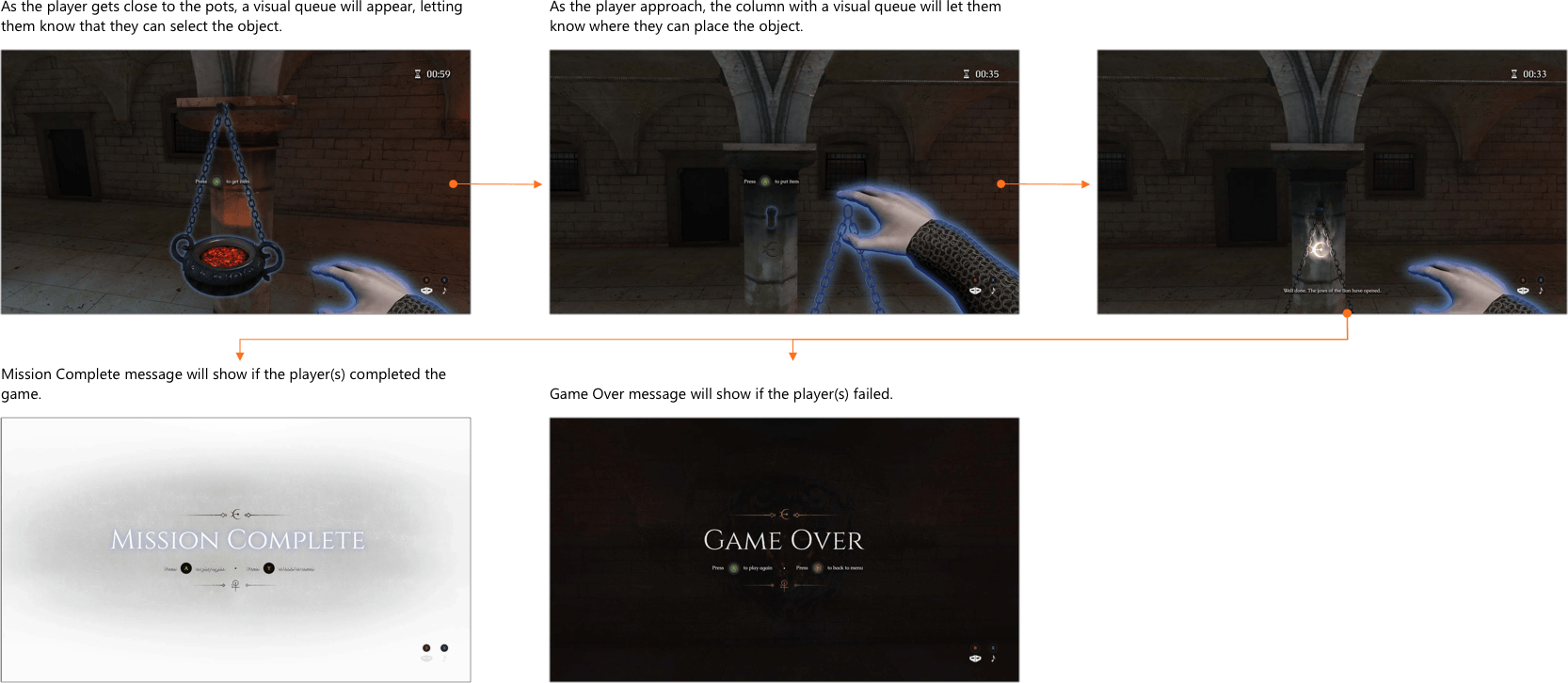
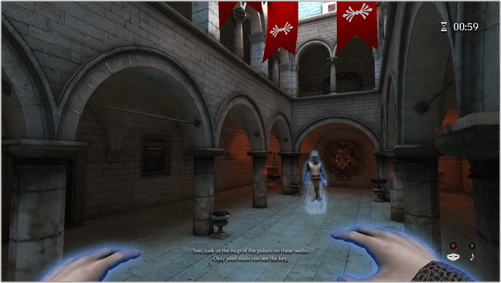
I oversaw the work of a 3D designer, a visual designer, provided creative directions and guidance on the visual design.
PHASE 1 – KEY FINDINGS
Through Phase 1 launch, and from the greater Microsoft Edge team’s feedback, we identified a few things to update and improve. And because Microsoft is a global company, cultural and social awareness affected our decisions and allowed us to be proactive on potential issues.
· Buttons and messages needed to be more prominent to help guide the players
· We had to eliminate symbols and icons with potential religious connotations
· We needed a more inclusive character representation
· We added visual cues for controllers
Next steps
Before the full game opened to the general public online, we planned to incorporate:
· Web RTC tech to allow players to communicate and play together
· Non-VR mode to maximize exposure
· Compatibility for motion controllers and keyboard control
· Easy vs hard options
PHASE 2 - IDEATE
Game environment
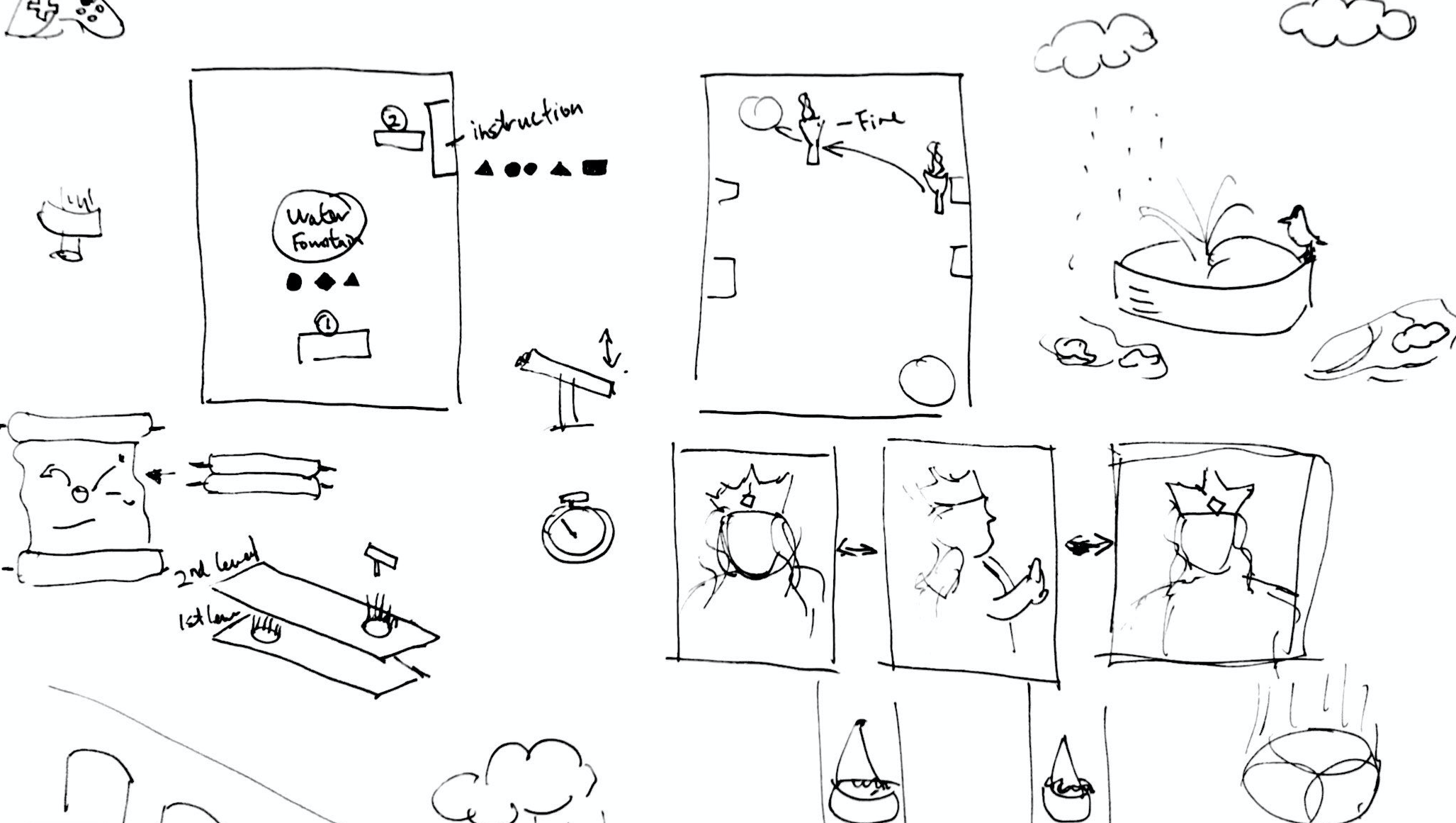
To enhance the experience, we started by brainstorming possible elements to add to the scene. Partnering with the engineering team, we defined the following possibilities to present to the client:
· A water fountain in the middle of the scene. As the player gets closer, they would hear the running water more clearly.
· A moving animal, like a bird flying in and landing on the water, a frog jumping around, or a scurrying rat.
· Animated cloud movement.
· Puddles with reflection effects.
· King’s motion portrait (Harry Potter style).
· Dark mode.
· Fire torches and fire animation.
· Rain effects.
Idea 1: Dynamic puzzle
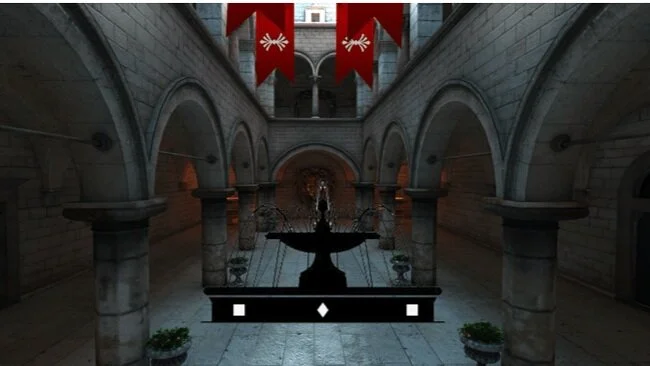
We wanted to make the game more interesting and dynamic. In the middle of the palace, there would be a water fountain with a few different shapes sticking out of one side. Players would push the shapes in a specific sequence to get to the treasure.
Both players needed to stand at specific spots at the same time for the clue to appear. The sequence would be revealed to one player, who would then tell the other player how to enter it at the water fountain.
The sequence would be different each time someone restarted the game, with a longer sequence offered in hard mode.
Idea 2: Light up the Palace
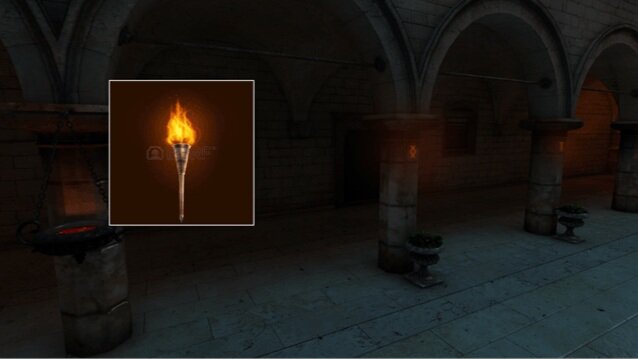
This idea centered around a light and a dark mode. The game started by asking players to move the pots to the right positions. After 30 seconds, a bird would fly in, it would rain, and the lights would go out. Players had to pick up a torch on the side of the wall and throw it into the fire pit to light up the palace. Players would then continue to complete the puzzle.
I led the brainstorming efforts, organized meetings, and work sessions with designers, engineers, and the project manager to narrow it down to two different ideas.
PHASE 2 – User flow
Through a few internal and external discussions, we opted to add the water fountain puzzle and include the Phase 1 game as a bonus.
A scoring system based on how quickly the game was completed.
PHASE 2 – Prototype
Since we needed to add in the different game mode and device options, we added the selection flow and some instructions. We also added a flyout menu to provide device and software support.
Phase 2 final game design
After multiple rounds of refinement, testing, and prototyping, we launched the final game. We decided to remove the backstory introduction video and focused on the gameplay. We also edited the flags to show the Microsoft Edge and Babylon.JS logo to enhance the partnership.
The player can review technical support information before they enter the game. Then they can select the number of players, device options, and difficulty level.
The player completes the water fountain puzzle.
In single-player mode, the player has to memorize the puzzle sequence.
In multiplayer mode, both players need to be in the correct position to see the puzzle sequence.
In online mode, players use Web RTC to communicate and solve the puzzle together.
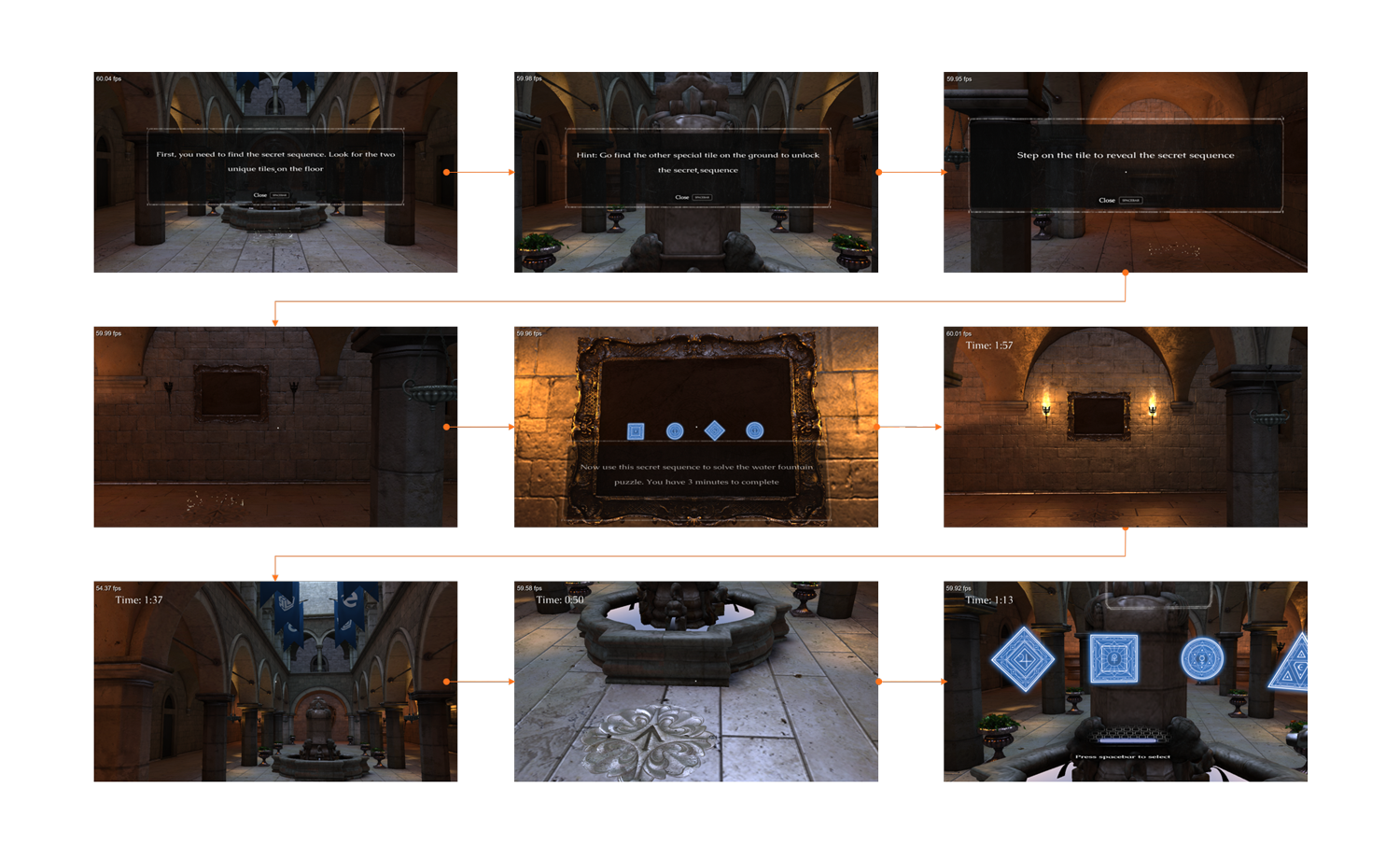
After the water fountain puzzle is solved, players can choose whether to play the bonus game.
If the bonus game is selected, players can use their remaining time to move as many pots to the correct position as possible.
In Phase 2, we also added blue and yellow glows around the columns to help players identify where to pick up and place the pots.
RESULTS
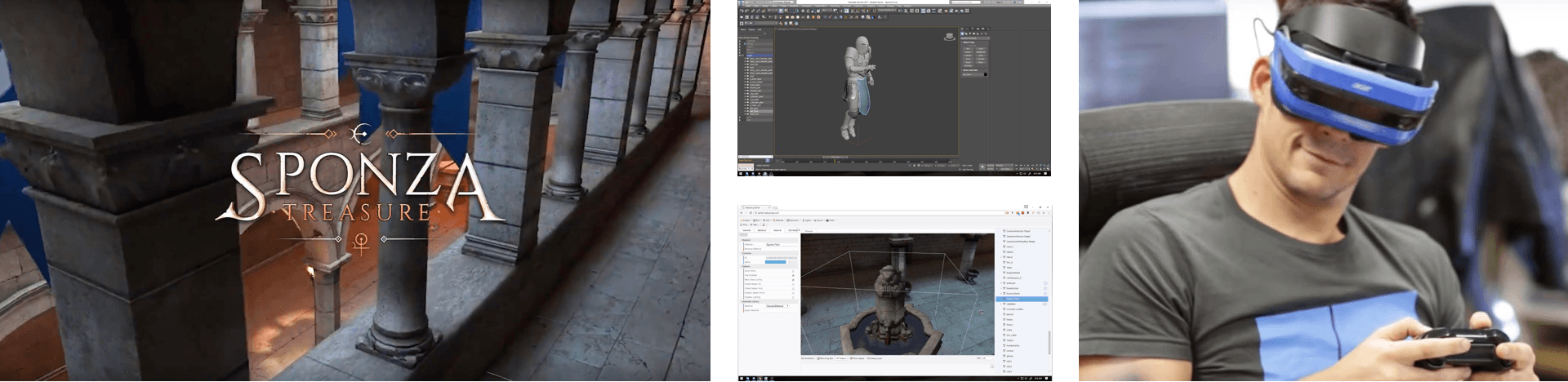
Phase 2 was launched at the Microsoft Build 2018 conference. It was a great success and allowed Microsoft to promote the Edge browser while event participants experienced WebVR in a fun way.
Main challenges we overcame:
· The learning curve on VR development and UX.
· Early limitations in Microsoft Edge’s WebVR support.
· When the project started, the Windows devices were not yet available. We worked with a prototype for some of the testing and results were unstable; we relied on the Oculus for most of the early testing.
· Although the focus is on the Microsoft Edge browser and with Windows VR device, we also needed to make sure the game was compatible across different browsers and devices. At the time, there were new devices coming out and we had to work quickly to adapt to the market.
· We only had one 3D designer on board, complicating design resource scheduling.